
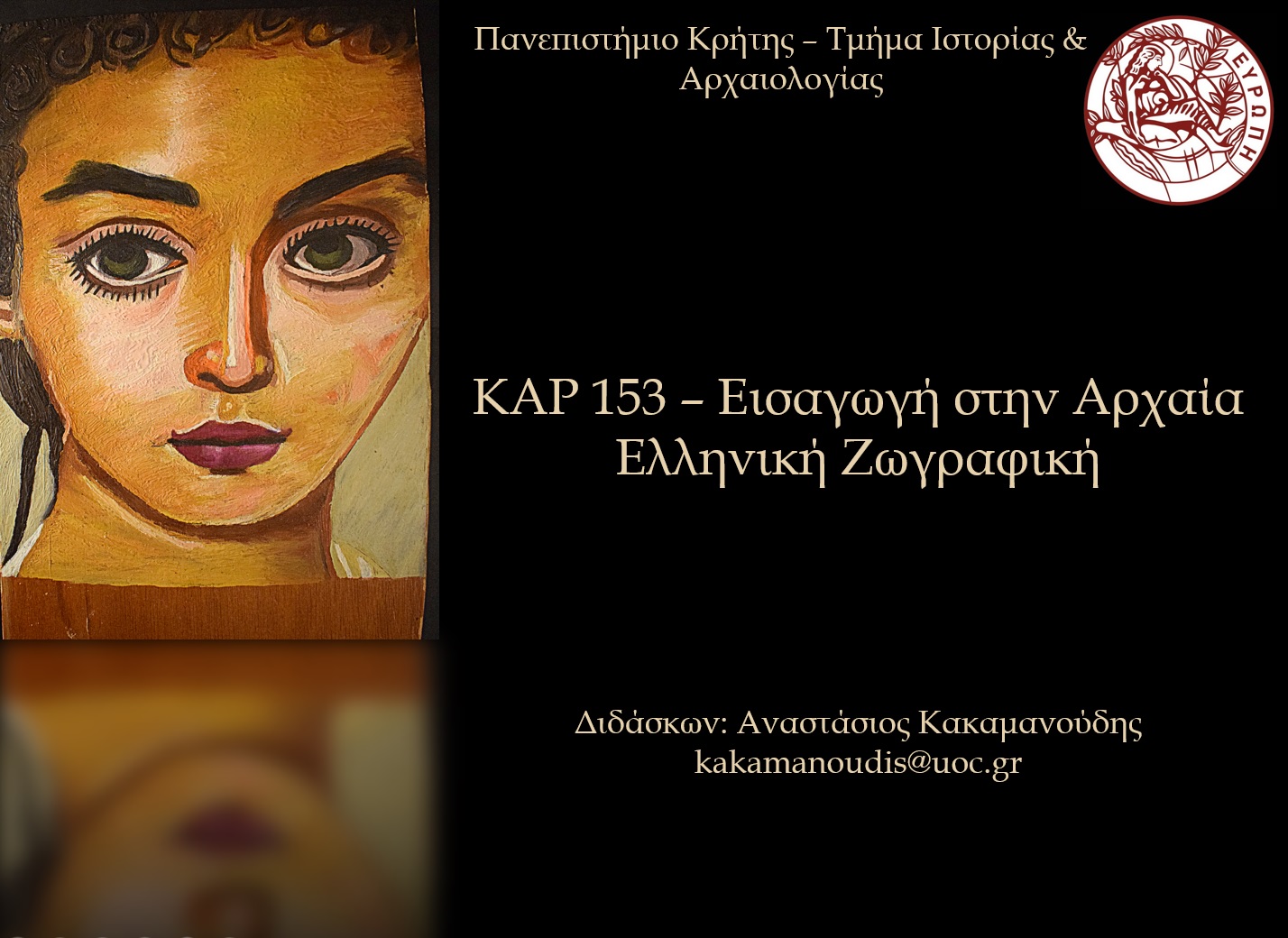
Αντικείμενο του μαθήματος είναι μελέτη της αρχαίας ελληνικής ζωγραφικής και πολυχρωμίας, από τεχνική, εικονογραφική, αισθητική και λειτουργική σκοπιά. Τα σωζόμενα έργα εξετάζονται σε αντιπαραβολή με τις σχετικές πληροφορίες των αρχαίων γραπτών πηγών και εντός των ευρύτερων χωρικών, κοινωνικών και ιδεολογικών συμφραζομένων τους. Όσον αφορά τα υλικά και τις τεχνικές, γίνεται αναφορά στα διάφορα ζωγραφικά υποστρώματα, τις χρωστικές ύλες και οι τεχνικές ζωγραφικής (νωπογραφία, ξηρογραφία, εγκαυστική), καθώς και στις σύγχρονες μέθοδοι εξέτασης και ανάλυσης των ζωγραφικών έργων. Ανάμεσα στα θέματα που θα αναπτυχθούν στο μάθημα είναι οι απαρχές της ελληνικής ζωγραφικής, η ζωγραφική και η πολυχρωμία της αρχιτεκτονικής και της πλαστικής της αρχαϊκής περιόδου, οι αισθητικές κατακτήσεις των ζωγράφων της κλασικής περιόδου, η υστεροκλασική-ελληνιστική ταφική ζωγραφική της Μακεδονίας, καθώς και οι γραπτές επιτύμβιες στήλες και η πολυχρωμία της αρχιτεκτονικής και της πλαστικής κατά την ίδια περίοδο. Γίνεται, τέλος, αναφορά στη ζωγραφική και τα ψηφιδωτά της ελληνιστικής και ρωμαϊκής περιόδου, καθώς και στις επιβιώσεις και την πρόσληψη της αρχαίας ελληνικής ζωγραφικής σε μεταγενέστερες περιόδους.
The subject of the course is the study of ancient greek painting and polychromy, from a technical, iconographic, aesthetic and functional point of view. The surviving works are examined in combination with the relevant information of the ancient written sources and into the frame of their spatial, social and ideological context. Regarding materials and techniques, reference is made to the painting substrates, the various pigments and the different painting techniques (fresco, tempera, encaustic), as well as to the modern scientific methods of examination and analysis of the surviving paintings. Among the topics examined, are the beginnings of ancient Greek painting, the painting and the polychromy of architecture and sculpture of the archaic period, the aesthetic achievements of the painters of the classical period and their influence in contemporary vase-painting, the late-classical- and hellenistic funerary painting of Macedonia, as well as the painted tombstones and the sculptural polychromy of the same period. Finally, reference is made to the painting and mosaics of the Hellenistic and Roman periods, as well as to the survival and perception of ancient Greek painting in later periods.
- Διδάσκων/Διδάσκουσα: Αναστασίος Κακαμανούδης